Kwara Connect
KWARA PULSE

Latest News & Events in Kwara State

Stay updated with current developments, cultural festivals, agricultural milestones, business news, and tech innovations in Kwara State.

Latest Articles & Bulletins

Kwara State Launches Innovation Hub in Ilorin
Aug 26, 2026

Kwara State Launches Innovation Hub in Ilorin

The Kwara State Government has officially launched its state-of-the-art Innovation Hub in Ilorin, the state capital. The hub is designed to empower youths with digital skills, software engineering training, and startup incubation support to boost local tech development. Goverment officials confirmed that the hub will collaborate with global tech giants to provide certified training programs.

Read Full Article
Esie Museum Announces Cultural Heritage Festival
Aug 26, 2026

Esie Museum Announces Cultural Heritage Festival

The famous Esie Museum, home to the mysterious stone images, has announced its upcoming annual Cultural Heritage Festival. The event will showcase traditional dances, historical lectures, and guided tours, attracting visitors from all over Nigeria. The curator promised an immersive experience showing Kwara State's rich cultural history.

Read Full Article
Expansion of Offa Agricultural Hub Begins
Aug 26, 2026

Expansion of Offa Agricultural Hub Begins

Local farmers in Offa and surrounding communities are set to benefit from the newly approved agricultural hub expansion. The project aims to provide modern storage facilities, tractor access, and direct links to markets in neighbouring states. The initiative is part of efforts to make Kwara State a leading food producer in the region.

Read Full Article
Ilu Ilofa - Headquarters of Oke Ero LGA Of Kwara State
Jun 16, 2026

Ilu Ilofa - Headquarters of Oke Ero LGA Of Kwara State

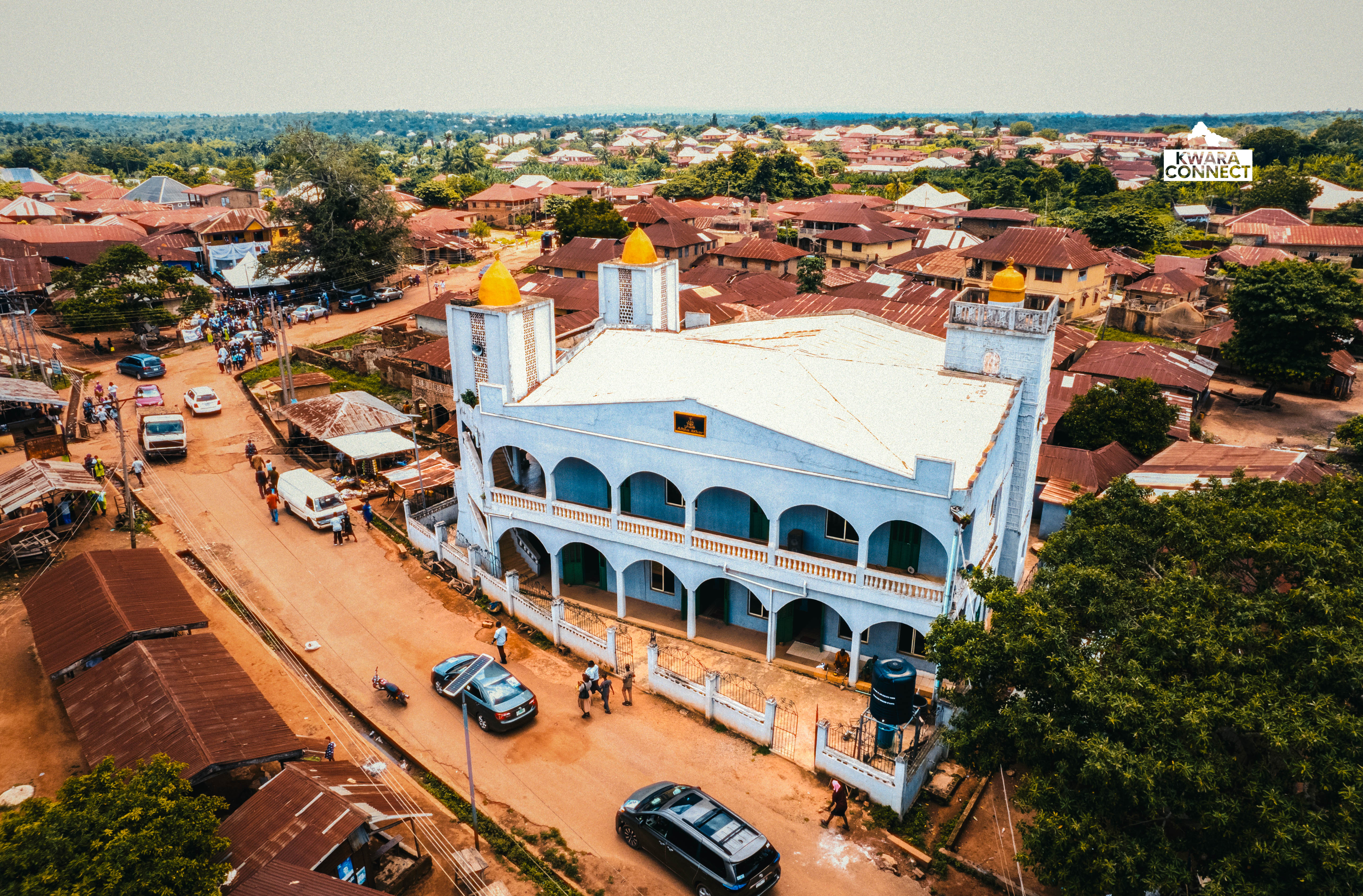
Iloffa is an ancient Yoruba town and the administrative headquarters of Oke Ero Local Government Area (LGA) in Kwara State, Nigeria. Located in the southern region of the state, it sits roughly 110 kilometers south of the state capital, Ilorin. 🏛️ Governance and Traditional Leadership The traditional ruler of the town holds the title of the Alofa of Iloffa, His Royal Majesty, Oba Samuel Niyi Dada, the Okinbaloye Aponbiepo II who is a designated first-class Oba in Kwara State. 🔸Council Status: The Alofa of Iloffa currently serves as the chairman of the traditional council for the entire Oke Ero Local Government Area. 🔸Local Administration: It houses the Oke Ero Local Government Area Secretariat and the Kwara State Internal Revenue Service (KWIRS) local office. 🔸Founding Father: According to historical accounts, the community was founded by a skilled hunter named Are, who migrated from the ancient city of Ile-Ife. 🔸Meaning of Name: Are specialized in crafting and applying traditional medicine to arrows on a massive rock named Egunpe. His popularity grew to the point where visitors would say "Mo nlo ilu ti won nlo ofa" ("I am going to the town where arrows are sharpened"), which gradually evolved into the name Ilu-offa and later Iloffa) 🌾 Agriculture: The community operates a largely agrarian economy, growing staple and cash crops like cocoa, yams, and palm oil. 🔸Education: Higher learning has grown in the community with the establishment of the National Open University of Nigeria (NOUN) Iloffa Community Study Centre. https://kwaraconnect.com/oke-onigbin/ 🗺️ Tourism and Culture The town and its immediate surrounding districts feature several cultural and historical attractions like: 🔸Imole-Boja Rock Shelter: A massive natural rock formation historically used for shelter. 🔸Prayer Mountain: The historical prayer mountain and relics of Apostle Joseph Ayodele Babalola, the famous pioneer of Nigerian Pentecostalism, are situated in the immediate district. 🔸Festivals: The community celebrates several traditional cultural events

Read Full Article
Ilu Ilofa - Headquarters of Oke Ero LGA Of Kwara State
Jun 16, 2026

Ilu Ilofa - Headquarters of Oke Ero LGA Of Kwara State

Iloffa is an ancient Yoruba town and the administrative headquarters of Oke Ero Local Government Area (LGA) in Kwara State, Nigeria. Located in the southern region of the state, it sits roughly 110 kilometers south of the state capital, Ilorin. 🏛️ Governance and Traditional Leadership The traditional ruler of the town holds the title of the Alofa of Iloffa, His Royal Majesty, Oba Samuel Niyi Dada, the Okinbaloye Aponbiepo II who is a designated first-class Oba in Kwara State. 🔸Council Status: The Alofa of Iloffa currently serves as the chairman of the traditional council for the entire Oke Ero Local Government Area. 🔸Local Administration: It houses the Oke Ero Local Government Area Secretariat and the Kwara State Internal Revenue Service (KWIRS) local office. 🔸Founding Father: According to historical accounts, the community was founded by a skilled hunter named Are, who migrated from the ancient city of Ile-Ife. 🔸Meaning of Name: Are specialized in crafting and applying traditional medicine to arrows on a massive rock named Egunpe. His popularity grew to the point where visitors would say "Mo nlo ilu ti won nlo ofa" ("I am going to the town where arrows are sharpened"), which gradually evolved into the name Ilu-offa and later Iloffa) 🌾 Agriculture: The community operates a largely agrarian economy, growing staple and cash crops like cocoa, yams, and palm oil. 🔸Education: Higher learning has grown in the community with the establishment of the National Open University of Nigeria (NOUN) Iloffa Community Study Centre. https://kwaraconnect.com/oke-onigbin/ 🗺️ Tourism and Culture The town and its immediate surrounding districts feature several cultural and historical attractions like: 🔸Imole-Boja Rock Shelter: A massive natural rock formation historically used for shelter. 🔸Prayer Mountain: The historical prayer mountain and relics of Apostle Joseph Ayodele Babalola, the famous pioneer of Nigerian Pentecostalism, are situated in the immediate district. 🔸Festivals: The community celebrates several traditional cultural events

Read Full Article
How KWGIS Is Transforming Land Administration in Kwara
Jun 08, 2026

How KWGIS Is Transforming Land Administration in Kwara

By Rowland Olonishuwa For many years, land administration in several parts of Nigeria was associated with delays, uncertainty, missing files, middlemen interference, and cumbersome documentation processes. Citizens seeking land titles or Certificates of Occupancy frequently encountered frustrating experiences that undermined confidence in government systems. In Kwara State, however, a new direction is emerging through the establishment and strengthening of the Kwara State Geographic Information Service (KWGIS) under the visionary leadership of Governor AbdulRahman AbdulRazaq. Recognising that effective land administration is fundamental to economic growth, urban development, investment confidence, and social stability, the Governor initiated reforms aimed at modernising the sector and transforming it into a transparent, efficient, and citizen-focused system. Today, KWGIS stands as one of the clearest examples of institutional reform in Kwara State. KWGIS is driving digital transformation At the centre of this transformation is the Executive Chairman of KWGIS, ESV Sulyman Babatunde AbdulKareem, and his management team. Together, they have worked tirelessly to translate the Governor's vision into measurable results. Through strategic planning, innovation, and the deployment of modern technology, the agency has transitioned from largely analogue operations to a digital-driven system designed to simplify land administration for Kwarans. One of the agency's most significant achievements is the digitalisation of land records and processes. Before these reforms, retrieving files could take days, weeks, or even months. In some cases, files proved difficult to trace, while many citizens depended on unofficial intermediaries to navigate the system. Today, however, the situation has changed considerably. With the introduction of digital file management, automated workflows, and electronic billing systems, land documentation processes have become faster, more transparent, and easier to track. As a result, applicants can now monitor the progress of their files with greater clarity, while digital records help reduce the risks associated with file loss, manipulation, and unnecessary delays. And restoring public confidence This transformation goes beyond technology. More importantly, it is about restoring public confidence in land administration. The Governor's vision for KWGIS was never limited to computers and software. Rather, the objective was to build an institution where citizens feel respected, protected, and properly served. It was about creating a system where professionalism replaces uncertainty and where landowners can access government services without fear or exploitation. Gradually, that vision is becoming a reality. Under the current leadership of KWGIS, the agency has strengthened service delivery standards, improved customer engagement, enhanced transparency in billing, and introduced systems that reduce opportunities for abuse. Consequently, Kwarans are beginning to experience a more organised, accountable, and responsive land administration process. Supporting economic growth and investment The benefits of these reforms extend far beyond documentation. A functional land administration system creates economic opportunities for individuals and businesses alike. When land titles are secure and properly documented, property owners can invest confidently in development. They can access mortgages, secure loans, build homes, establish businesses, and contribute more actively to the economy. Likewise, transparent land administration systems inspire investor confidence. Investors are more willing to commit resources to environments where land ownership records are reliable, accessible, and professionally managed. For this reason, the reforms within KWGIS are critical to the broader economic future of Kwara State. Strengthening urban development The reforms are also supporting physical planning and urban development. Through modern mapping systems, advanced survey technologies, and improved coordination among technical departments, the state is laying stronger foundations for smart city initiatives, urban renewal programmes, and strategic development projects. As these systems continue to evolve, they will play an increasingly important role in shaping a more organised and sustainable urban future for Kwara State. The leadership, teamwork and institutional commitment Importantly, the achievements recorded by KWGIS did not happen by accident. Instead, they are the product of deliberate leadership, teamwork, and institutional commitment. The Executive Chairman, alongside directors, technical staff, and civil servants within the agency, has embraced the responsibility of ensuring that the Governor's vision is not only implemented but also sustained. Furthermore, the emphasis on staff training and institutional participation has fostered a stronger sense of ownership across the organisation. Rather than excluding civil servants from the reform process, the administration ensured they received the training and support needed to operate effectively within the new digital environment. Without doubt, this approach has strengthened both the sustainability and effectiveness of the reforms. And a foundation for the future For Kwarans, these achievements are worth celebrating. A transparent and efficient land administration system is not a luxury; it is a critical foundation for development. It protects citizens, encourages investment, improves government efficiency, and creates opportunities for future growth. Indeed, the transformation taking place at KWGIS demonstrates what is possible when visionary leadership is combined with professionalism, innovation, and a genuine commitment to public service. As the reforms continue to deepen, one fact is becoming increasingly clear: KWGIS is not merely processing land documents. The agency is helping to build a modern Kwara State where governance works better for the people, development is better planned, and citizens can participate more confidently in the state's economic future. That is a vision worth supporting. For many Kwarans, it is already becoming a reality. Olonishuwa is the Press Secretary, Kwara State Geographic Information Service (KWGIS).

Read Full Article
How KWGIS Is Transforming Land Administration in Kwara
Jun 08, 2026

How KWGIS Is Transforming Land Administration in Kwara

By Rowland Olonishuwa For many years, land administration in several parts of Nigeria was associated with delays, uncertainty, missing files, middlemen interference, and cumbersome documentation processes. Citizens seeking land titles or Certificates of Occupancy frequently encountered frustrating experiences that undermined confidence in government systems. In Kwara State, however, a new direction is emerging through the establishment and strengthening of the Kwara State Geographic Information Service (KWGIS) under the visionary leadership of Governor AbdulRahman AbdulRazaq. Recognising that effective land administration is fundamental to economic growth, urban development, investment confidence, and social stability, the Governor initiated reforms aimed at modernising the sector and transforming it into a transparent, efficient, and citizen-focused system. Today, KWGIS stands as one of the clearest examples of institutional reform in Kwara State. KWGIS is driving digital transformation At the centre of this transformation is the Executive Chairman of KWGIS, ESV Sulyman Babatunde AbdulKareem, and his management team. Together, they have worked tirelessly to translate the Governor's vision into measurable results. Through strategic planning, innovation, and the deployment of modern technology, the agency has transitioned from largely analogue operations to a digital-driven system designed to simplify land administration for Kwarans. One of the agency's most significant achievements is the digitalisation of land records and processes. Before these reforms, retrieving files could take days, weeks, or even months. In some cases, files proved difficult to trace, while many citizens depended on unofficial intermediaries to navigate the system. Today, however, the situation has changed considerably. With the introduction of digital file management, automated workflows, and electronic billing systems, land documentation processes have become faster, more transparent, and easier to track. As a result, applicants can now monitor the progress of their files with greater clarity, while digital records help reduce the risks associated with file loss, manipulation, and unnecessary delays. And restoring public confidence This transformation goes beyond technology. More importantly, it is about restoring public confidence in land administration. The Governor's vision for KWGIS was never limited to computers and software. Rather, the objective was to build an institution where citizens feel respected, protected, and properly served. It was about creating a system where professionalism replaces uncertainty and where landowners can access government services without fear or exploitation. Gradually, that vision is becoming a reality. Under the current leadership of KWGIS, the agency has strengthened service delivery standards, improved customer engagement, enhanced transparency in billing, and introduced systems that reduce opportunities for abuse. Consequently, Kwarans are beginning to experience a more organised, accountable, and responsive land administration process. Supporting economic growth and investment The benefits of these reforms extend far beyond documentation. A functional land administration system creates economic opportunities for individuals and businesses alike. When land titles are secure and properly documented, property owners can invest confidently in development. They can access mortgages, secure loans, build homes, establish businesses, and contribute more actively to the economy. Likewise, transparent land administration systems inspire investor confidence. Investors are more willing to commit resources to environments where land ownership records are reliable, accessible, and professionally managed. For this reason, the reforms within KWGIS are critical to the broader economic future of Kwara State. Strengthening urban development The reforms are also supporting physical planning and urban development. Through modern mapping systems, advanced survey technologies, and improved coordination among technical departments, the state is laying stronger foundations for smart city initiatives, urban renewal programmes, and strategic development projects. As these systems continue to evolve, they will play an increasingly important role in shaping a more organised and sustainable urban future for Kwara State. The leadership, teamwork and institutional commitment Importantly, the achievements recorded by KWGIS did not happen by accident. Instead, they are the product of deliberate leadership, teamwork, and institutional commitment. The Executive Chairman, alongside directors, technical staff, and civil servants within the agency, has embraced the responsibility of ensuring that the Governor's vision is not only implemented but also sustained. Furthermore, the emphasis on staff training and institutional participation has fostered a stronger sense of ownership across the organisation. Rather than excluding civil servants from the reform process, the administration ensured they received the training and support needed to operate effectively within the new digital environment. Without doubt, this approach has strengthened both the sustainability and effectiveness of the reforms. And a foundation for the future For Kwarans, these achievements are worth celebrating. A transparent and efficient land administration system is not a luxury; it is a critical foundation for development. It protects citizens, encourages investment, improves government efficiency, and creates opportunities for future growth. Indeed, the transformation taking place at KWGIS demonstrates what is possible when visionary leadership is combined with professionalism, innovation, and a genuine commitment to public service. As the reforms continue to deepen, one fact is becoming increasingly clear: KWGIS is not merely processing land documents. The agency is helping to build a modern Kwara State where governance works better for the people, development is better planned, and citizens can participate more confidently in the state's economic future. That is a vision worth supporting. For many Kwarans, it is already becoming a reality. Olonishuwa is the Press Secretary, Kwara State Geographic Information Service (KWGIS).

Read Full Article
Nigeria Police: "The Era of Impunity is Over," Warns Kwara State CP
Jun 01, 2026

Nigeria Police: "The Era of Impunity is Over," Warns Kwara State CP

The days of looking the other way when police officers misbehave are officially over in Kwara State. In a decisive move to clean up the ranks, the Kwara State Commissioner of Police, Adekimi Ojo, has issued a stern warning to his officers to shape up, explicitly declaring that the era of impunity within the Nigeria Police Force has come to an end. The warning came during a major strategic briefing on Monday, where CP Ojo met with top brass across the state—including Deputy Commissioners of Police, Area Commanders, Divisional Police Officers (DPOs), and Tactical Commanders. According to a statement by the Command’s spokesperson, Adetoun Ejire-Adeyemi, the meeting was called to reinforce the strict discipline, accountability, and professionalism demanded by the Inspector-General of Police, Olatunji Disu. A New Standard of Accountability CP Ojo made it clear that the leadership of the force will no longer tolerate any form of misconduct or abuse of power. Addressing his senior officers, he stated: “The era of impunity is over, and every officer must conduct himself or herself in a manner that upholds the integrity, discipline, and professionalism expected of members of the Force.” He reminded personnel to watch how they act and speak while on duty, pointing out that in today's digital age, the public is always watching. Because of smartphones and social media, an officer's actions can easily be captured on camera, potentially dragging the reputation of the entire force through the mud—something that will now carry heavy penalties. “Any officer captured engaging in misconduct, incivility, abuse of authority, extortion, harassment, or any conduct capable of bringing the Force into disrepute will face stringent disciplinary actions in accordance with established police regulations,” he stated. Strict Social Media Rules The briefing also tackled how officers behave online. Delivering a lecture on the Force’s Social Media Policy, Ojo warned that reckless behavior online or leaking official police information puts everyone at risk. “Careless online conduct, unauthorized dissemination of official information, and activities capable of undermining operational security or the image of the Force will attract appropriate sanctions,” he warned. Taking Policing Back to the Community Beyond enforcing discipline internally, the Commissioner is also looking outward to secure the state. He ordered all DPOs to immediately step up their grassroots engagement by working closely with local stakeholders, including school proprietors, principals, and religious leaders. The goal is to build strong partnerships to protect places of worship, schools, and other public spaces from rising security threats. “The command remains committed to strengthening partnerships with critical stakeholders in order to enhance security and ensure the protection of lives and property across Kwara State,” he said. Wrapping up the briefing, the CP reassured Kwara residents that the command is fully dedicated to intelligence-led policing, accountability, and community trust, while keeping its own officers on a tight leash. This move is part of a broader, ongoing effort by the Nigeria Police Force in recent years to root out corruption, extortion, and abuse of authority through stricter internal discipline and better community relations.

Read Full Article
Nigeria Police: "The Era of Impunity is Over," Warns Kwara State CP
Jun 01, 2026

Nigeria Police: "The Era of Impunity is Over," Warns Kwara State CP

The days of looking the other way when police officers misbehave are officially over in Kwara State. In a decisive move to clean up the ranks, the Kwara State Commissioner of Police, Adekimi Ojo, has issued a stern warning to his officers to shape up, explicitly declaring that the era of impunity within the Nigeria Police Force has come to an end. The warning came during a major strategic briefing on Monday, where CP Ojo met with top brass across the state—including Deputy Commissioners of Police, Area Commanders, Divisional Police Officers (DPOs), and Tactical Commanders. According to a statement by the Command’s spokesperson, Adetoun Ejire-Adeyemi, the meeting was called to reinforce the strict discipline, accountability, and professionalism demanded by the Inspector-General of Police, Olatunji Disu. A New Standard of Accountability CP Ojo made it clear that the leadership of the force will no longer tolerate any form of misconduct or abuse of power. Addressing his senior officers, he stated: “The era of impunity is over, and every officer must conduct himself or herself in a manner that upholds the integrity, discipline, and professionalism expected of members of the Force.” He reminded personnel to watch how they act and speak while on duty, pointing out that in today's digital age, the public is always watching. Because of smartphones and social media, an officer's actions can easily be captured on camera, potentially dragging the reputation of the entire force through the mud—something that will now carry heavy penalties. “Any officer captured engaging in misconduct, incivility, abuse of authority, extortion, harassment, or any conduct capable of bringing the Force into disrepute will face stringent disciplinary actions in accordance with established police regulations,” he stated. Strict Social Media Rules The briefing also tackled how officers behave online. Delivering a lecture on the Force’s Social Media Policy, Ojo warned that reckless behavior online or leaking official police information puts everyone at risk. “Careless online conduct, unauthorized dissemination of official information, and activities capable of undermining operational security or the image of the Force will attract appropriate sanctions,” he warned. Taking Policing Back to the Community Beyond enforcing discipline internally, the Commissioner is also looking outward to secure the state. He ordered all DPOs to immediately step up their grassroots engagement by working closely with local stakeholders, including school proprietors, principals, and religious leaders. The goal is to build strong partnerships to protect places of worship, schools, and other public spaces from rising security threats. “The command remains committed to strengthening partnerships with critical stakeholders in order to enhance security and ensure the protection of lives and property across Kwara State,” he said. Wrapping up the briefing, the CP reassured Kwara residents that the command is fully dedicated to intelligence-led policing, accountability, and community trust, while keeping its own officers on a tight leash. This move is part of a broader, ongoing effort by the Nigeria Police Force in recent years to root out corruption, extortion, and abuse of authority through stricter internal discipline and better community relations.

Read Full Article

Upcoming Kwara Events & Festivals

What's happening around Kwara State

Jun 16, 2026 @ 12:27 PM

Kwara Kre8ives 2.0

Following the success of the first edition, Kwara Kre8ives continues to expand its impact with bigger opportunities and broader reach. 2.0 is being organized in collaboration with the Federal Ministry of Art, Culture, Tourism and Creative Economy alongside the Kwara State Government, with a mission to empower 2,000 creatives.

Kwara State